
Contents14
- The verdict — a first-generation Type-C / microSD / Android DAP; for a new purchase, go A300
- Build and layout
- What worked
- USB Type-C — the reason I switched
- microSD adds storage after the fact
- Sound tuning runs deep
- Android opens it up
- What didn’t
- Battery drain is high
- A general sluggishness
- Software support has ended
- Comparison — NW-A105 vs NW-A300 series vs phone-only
- FAQ
- Verdict — a device for experiencing the first Android-on-a-DAP generation
2026 update: Ported from the old VuePress blog (originally written in 2021, after about half a year of use). As of 2026, the current A-series line is the NW-A300 (NW-A306 in Japan, A307 internationally, released 2023). The NW-A105 itself is discontinued, with new stock only while supplies last. The bones of this review still hold up — just read it alongside the current model when considering a purchase.
I used the Sony Walkman NW-A105 for over five years, for music on the commute and on the road. It was the first Walkman generation to combine USB Type-C, microSD, and Android — the model where the connector finally caught up with the rest of the world.
Looking back from 2026, though, the strengths and weaknesses sit on very different sides of the ledger. This is a long-term impression, compared against the current NW-A300 line and against going phone-only.
The verdict — a first-generation Type-C / microSD / Android DAP; for a new purchase, go A300
Short answer: the NW-A105 was valuable as the first generation of Walkman with Type-C and Android. The sound-tuning depth still holds up. But the CPU and battery let it down, and for a new purchase in 2026, the current NW-A300 line is the easier recommendation.
The reasoning is that the NW-A105’s weak points — sluggish responsiveness and high idle drain — are tied to internal parts. They are not the kind of thing a firmware update can fix at the root. The later battery-saver helped operationally, but the underlying issue is still there.
Who should and should not buy one:
- Worth it: anyone who can find a cheap used unit and wants wired earphones, microSD, and deep sound tuning
- Skip it: anyone buying new, anyone whose music life is already on a phone, anyone who prioritises battery life
Build and layout
Short answer: a small Android device with a 3.6-inch touchscreen. The physical buttons cluster on the right edge; the bottom carries the 3.5 mm jack, USB Type-C, and microSD slot.
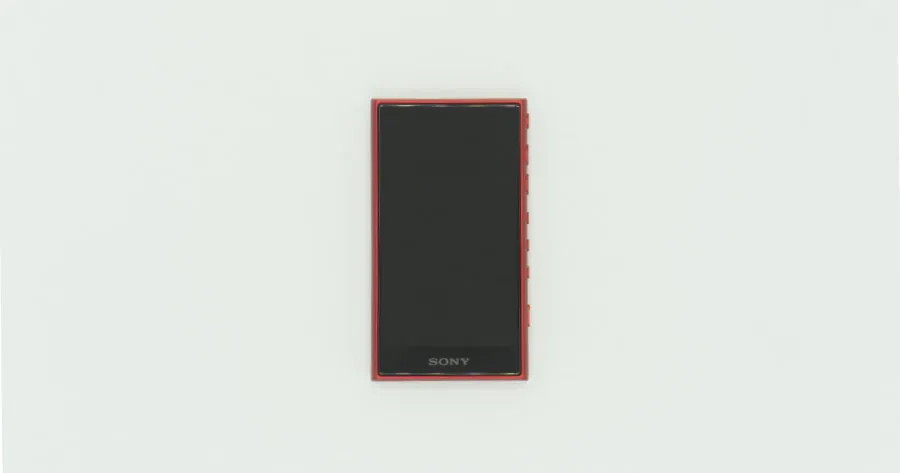
A hi-res-capable, Android-powered Walkman. Most operations happen on the touchscreen.
| Spec | Value |
|---|---|
| Display | 3.6 inch |
| Dimensions | 55.9 × 98.9 × 11 mm |
| Weight | 103 g |
| OS | Android 9 (at launch) |
| Ports | USB Type-C / 3.5 mm jack / microSD |
(rated)
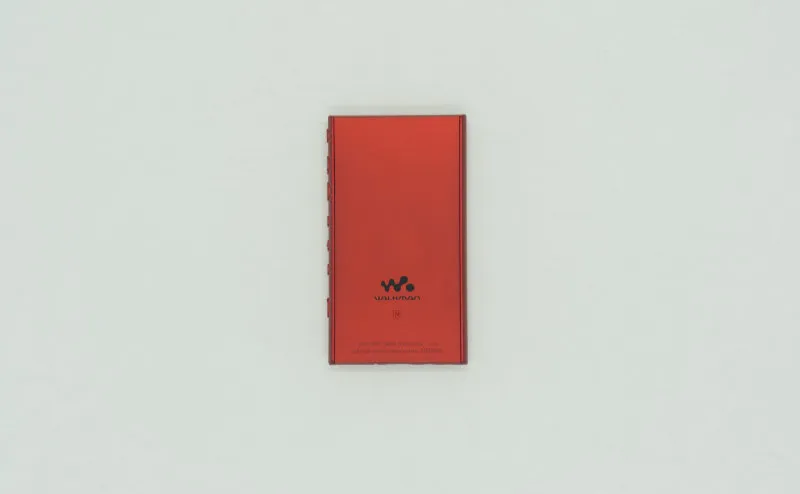
The back is matte, with a Walkman logo. Fingerprints stay out of sight.
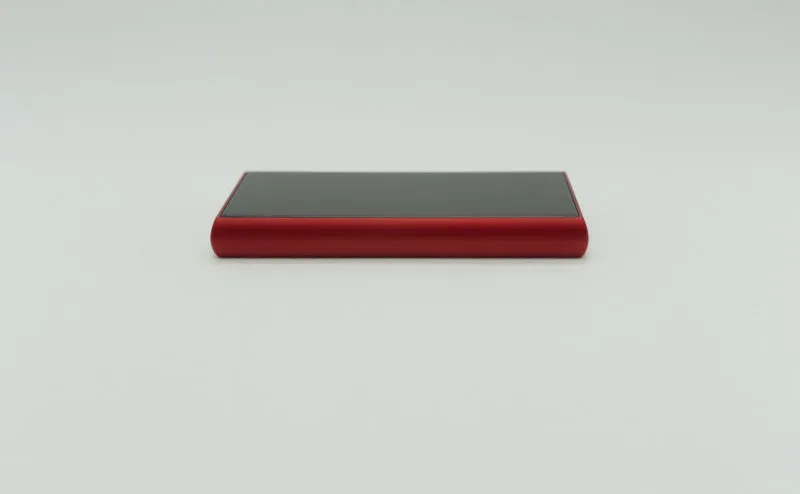
The left flank is bare — no buttons.
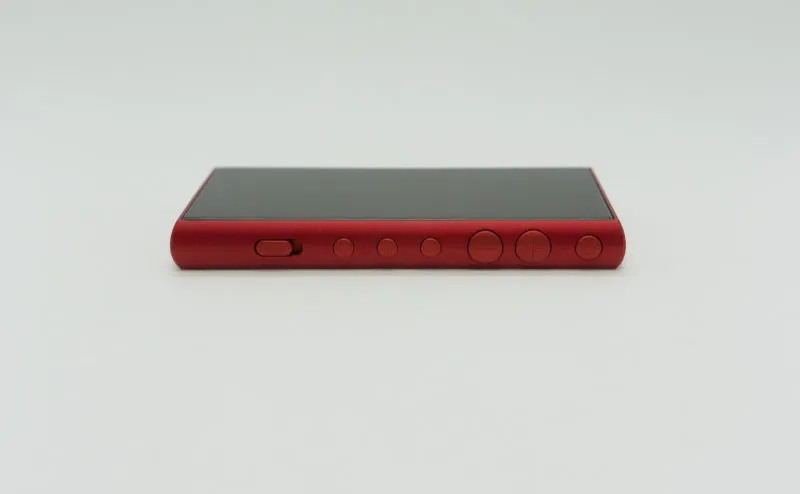
All the operating buttons live on the right. From left to right: hold / back / play-pause / forward / volume down / volume up / power. That layout lets you control playback blind, with the unit still in a bag or pocket — exactly what a DAP should get right.
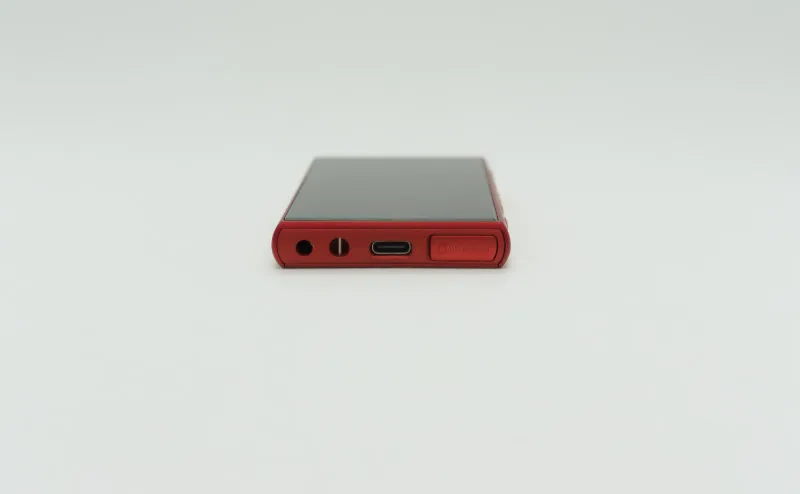
The bottom edge holds the 3.5 mm jack, a strap hole, USB Type-C, and the microSD slot. Keeping the 3.5 mm jack matters a lot if you live on wired earphones.
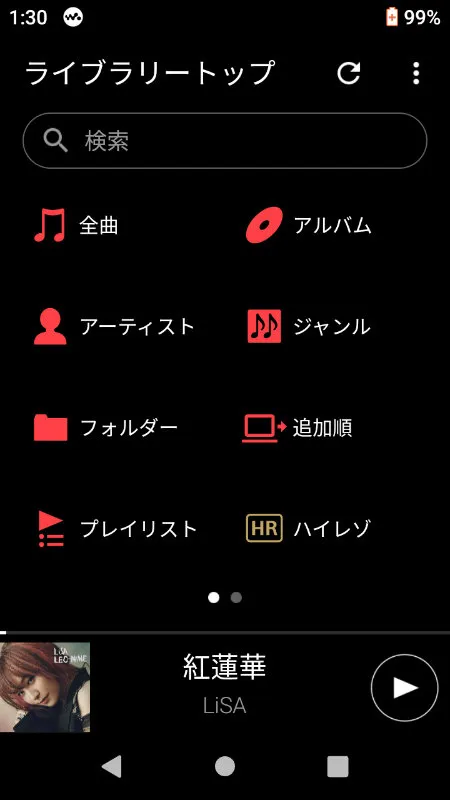
The home screen sticks close to stock Android. You can add apps freely (Google Play is supported).
What worked
Short answer: the Type-C / microSD / Android trio, plus the depth of Sony’s sound-processing options.
USB Type-C — the reason I switched
This was the deciding factor when I bought it. Earlier Walkman models used Sony’s proprietary WM-PORT, which meant carrying a dedicated cable everywhere.
Moving to Type-C means the same cable as the phone and the tablet. The “I forgot the Walkman cable on a business trip” disaster simply stops happening. That alone changed how I packed.
microSD adds storage after the fact
Internal storage is a modest 16 GB. Trying to manage a hi-res library on internal storage alone is not realistic.
Put another way: the device assumes a microSD card. The internal memory is for OS and apps; music lives on the card. With support up to 1 TB microSDXC, there is enough headroom for a serious library.
Sound tuning runs deep
This is where a Sony DAP earns its keep.
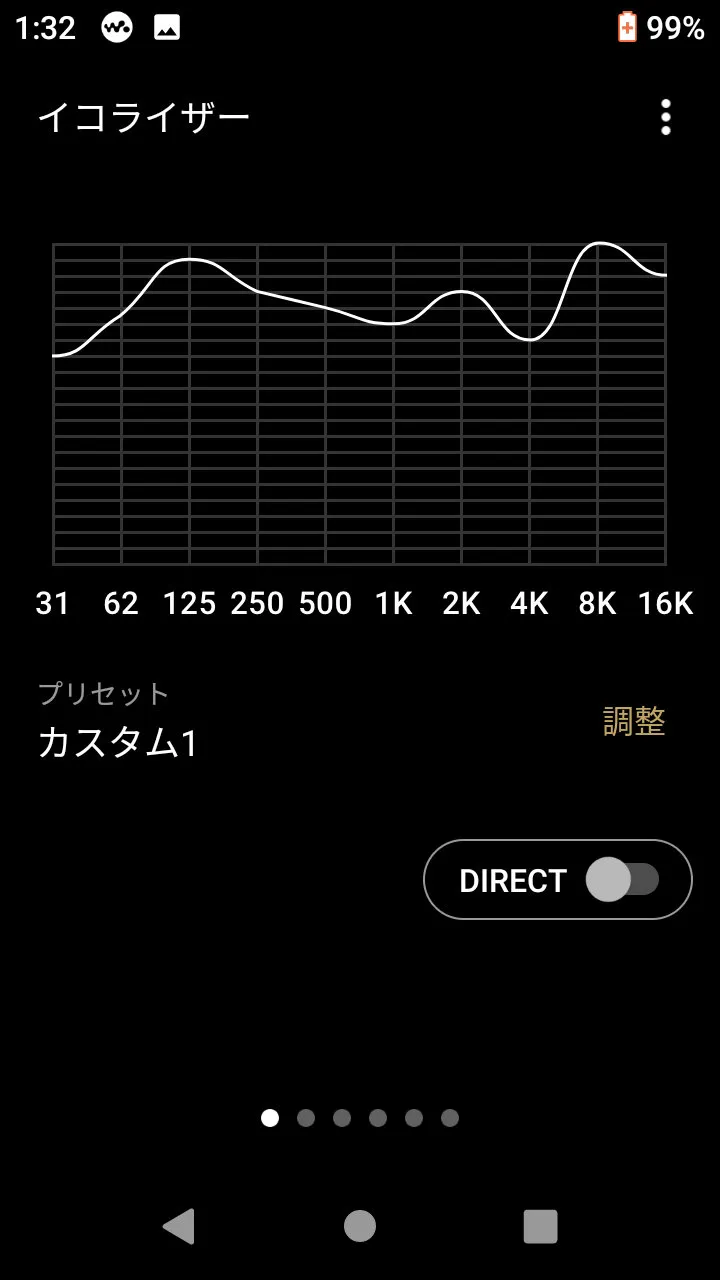
The equaliser is roughly ten bands of fine adjustment, with genre presets on top.
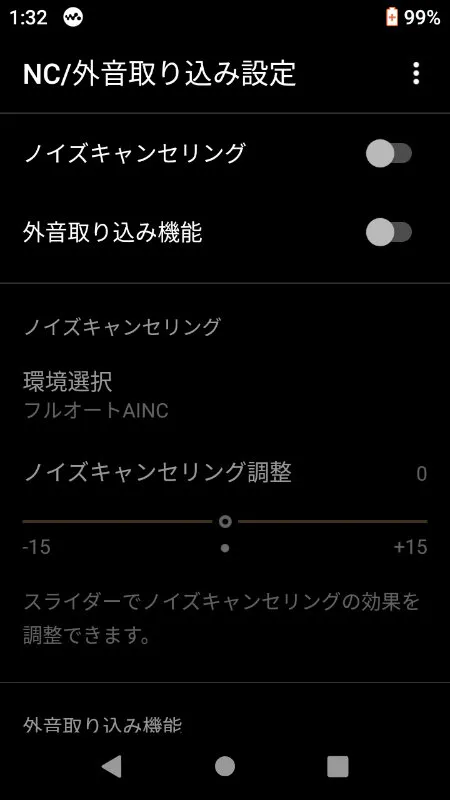
Noise cancelling assumes Sony’s compatible earphones (the IER-NW500N and similar). On a commuter train, it knocks the noise floor down hard.
The main sound-processing features:
- DSEE HX: upscales compressed audio toward hi-res
- DC Phase Linearizer: corrects phase characteristics to mimic an analogue amp
- Dynamic Normalizer: evens out volume differences between tracks
- Vinyl Processor: shapes the sound to feel like a record
- ClearAudio+: Sony’s recommended auto-optimisation preset
What you learn after living with it is that “everything on” is not always best. Toggling DSEE HX on or off per genre, for example, is where the sound changes character if you put in the time.
Android opens it up
It runs Android 9 at the base. Spotify, Apple Music, and YouTube Music install through Google Play. A single device handles a local library and streaming side by side.
Bluetooth pairing for handing audio off from a phone works the way you would expect.
What didn’t
Short answer: battery life and CPU speed. Both come down to hardware; neither is fixable in software.
Battery drain is high
The biggest complaint.
Just leaving it powered on visibly drains the battery. Idle for a day without playback still costs a meaningful chunk of the meter.
Sony quotes around 26 hours of hi-res playback. In real use, what hurts is the consumption during the hours you are not listening. A later firmware update added a battery saver that powers the unit off after a set period of inactivity, and that helped a lot operationally. It is still not a fix at the root.
For commuting, where you charge at home or at work every day, this is fine. For a two-day business trip without an easy charge, it is tight.
A general sluggishness
The CPU is modest, and it shows up as friction when opening apps, switching screens, or scrolling a large library.
It is not a device you tap constantly the way you do a phone, so it never becomes critical — but opening Spotify, tapping the search bar, and typing into it feels heavier than it should.
Software support has ended
As of 2026, the NW-A105 is still on Android 9, with no major updates. From a security standpoint, it is not suitable as a primary phone substitute.
As a dedicated music player, that is acceptable. The long-term compatibility of streaming apps, though, is not guaranteed.
Comparison — NW-A105 vs NW-A300 series vs phone-only
Short answer: buy new and the NW-A300 wins. Want the cheapest path that still works, used NW-A105. Want a single device for everything, the phone is fine.
| Angle | NW-A105 (2019) | NW-A300 series (2023–) | Phone-only |
|---|---|---|---|
| OS | Android 9 | Android 12 base | Latest per device |
| Perceived CPU speed | Sluggish | Improved | Depends on device |
| Battery (rated hi-res) | ~26 hours | ~36 hours (rated) | Shared with everything else |
| Internal storage | 16 GB | 32 GB (rated) | Depends on device |
| microSD | Yes (up to 1 TB) | Yes | Usually no |
| Ports | USB Type-C / 3.5 mm | USB Type-C / 3.5 mm | Type-C only on most |
| Noise cancelling (Sony earphones) | Supported | Supported | Not supported |
| DSEE HX-style processing | Yes | Yes (now DSEE Ultimate) | No |
| Price (2026 expectation) | Mostly used | New, ~mid-40,000s yen and up | Already in the phone |
The decision splits cleanly:
- You care about sound processing and a wired chain, and you do not want music draining the phone → NW-A300
- Same requirements, minimum cost → NW-A105 used
- Streaming-centric, wireless earphones, one device for everything → phone-only. You do not need a DAP
FAQ
Q. Is the NW-A105 worth buying new in 2026? A. For a new purchase, the current NW-A300 line (NW-A306 in Japan / A307 internationally) is the easier recommendation. The NW-A105 was released in 2019, and its CPU and battery life are both weak. If you only want a DAP with microSD, Type-C, and Android, and you can find a cheap used unit, it is still an option.
Q. Compared with listening on a phone, is there a reason to carry an NW-A105? A. Yes, if you want Sony’s noise cancelling or DSEE HX sound processing, or if you do not want music playback eating your phone’s battery. If your library lives entirely in streaming and you do not use wired earphones, a phone alone is enough.
Q. How long does the battery last? A. Sony lists about 26 hours of hi-res playback. In practice, idle drain is high — leaving it powered on for a day burns through a visible chunk even without playing. A later firmware update added a battery-saver auto-off feature.
Q. What is the maximum microSD capacity? A. Up to 1 TB microSDXC. Internal storage is only 16 GB, so any serious hi-res library has to live on the card — the design assumes you will use one.
Verdict — a device for experiencing the first Android-on-a-DAP generation
The NW-A105 belongs to the generation where “the Walkman finally went Type-C” and “the Walkman runs Android” arrived together. As a reason to buy at the time, that was enough, and after five-plus years it never stopped being a reliable home for the library.
Would I recommend buying one new today? No. The CPU and the battery are tied to the internal design, and the successor generation improved both directly. Either go cheap on a used unit, or step up to the current NW-A300 — those are the two sensible paths.
If your phone, paired with streaming and wireless earphones, already covers your music, there is no reason to add a DAP. Carrying one only earns its keep if you are unwilling to give up one of the three: wired earphones, deep sound processing, or microSD.