
Contents15
- The short answer — mini or Pro; the standard and Pro Max are the middle that’s easy to get lost in
- What changed at the iPhone 12 generation
- 5G support (Sub-6 only in Japan)
- OLED across the entire line-up (Super Retina XDR)
- MagSafe wireless charging
- The body returned to flat edges
- Picks by use case — which one to choose
- One-handed use — iPhone 12 mini (5.4 inches)
- Telephoto, low-light, LiDAR — iPhone 12 Pro / Pro Max
- Big screen — iPhone 12 Pro Max (6.7 inches)
- Everything else — iPhone 12 (standard, 6.1 inches)
- iPhone 12 line-up comparison
- iPhone 11 or iPhone 12 — which one to buy
- FAQ
- Wrapping up
2026 update: ported from the old VuePress blog. iPhone 12 was the first iPhone to ship into Japan’s 5G rollout (announced autumn 2020), and the generation where the split between mmWave models for the US and Sub-6-only models for Japan first settled into place. It is no longer a current new-product pick in 2026, but the framework still works for evaluating a used or last-gen buy. Always confirm current pricing and stock before you order. The numbers are the manufacturer’s published figures from the original writing; current official specs may differ.
The iPhone 12 has moved past the “buy it new” phase, but it is still a live option on the used and refurbished market if the goal is to own an iPhone cheaply right now. The line-up has four models — mini, standard, Pro, Pro Max — that differ in both size and camera.
This piece sorts the four on two axes: screen size and whether there’s an optical telephoto, then maps each model to a use case. If you are torn between iPhone 11 and iPhone 12, the answer flips on whether you’ll use 5G, so read through to the FAQ.
The short answer — mini or Pro; the standard and Pro Max are the middle that’s easy to get lost in
Short answer: mini if you want one-handed use, Pro line if you want telephoto and low-light. For everyone else the standard iPhone 12 is enough. The Pro Max is for people who want both a big screen and a telephoto.
Boil down the differences inside the iPhone 12 line and three points remain:
- Screen size: three steps — 5.4 / 6.1 / 6.7 inches
- Optical telephoto and LiDAR: Pro line only
- 5G mmWave: Japan-market units are all Sub-6 only
Starting from those three is faster than starting from price or storage.
What changed at the iPhone 12 generation
Short answer: 5G, OLED across the whole line-up, MagSafe, A14 Bionic, and a redesigned body. Coming from iPhone 11, the volume of change earns the “generational shift” label.
5G support (Sub-6 only in Japan)
iPhone 12 was the first 5G iPhone released in Japan. Japanese-market units are Sub-6 only; the mmWave models stayed North-America-only.
In day-to-day use, downstream speed picks up inside a 5G area, but outside one the phone falls back to 4G LTE — so “5G means fast” is not a clean shorthand. By 2026 the 5G footprint has grown, so the upside is easier to feel than it was at launch.
OLED across the entire line-up (Super Retina XDR)
On iPhone 11, the standard model used an IPS LCD and only the Pro line had OLED. From iPhone 12 onward, mini and standard included, every model is OLED, so deep blacks and HDR content became a shared baseline.
MagSafe wireless charging
A ring of magnets is built into the back, so first-party and third-party MagSafe chargers and accessories snap into place. The standard carried forward across iPhone 12 and beyond, so accessories accumulated over time keep their value.
The body returned to flat edges
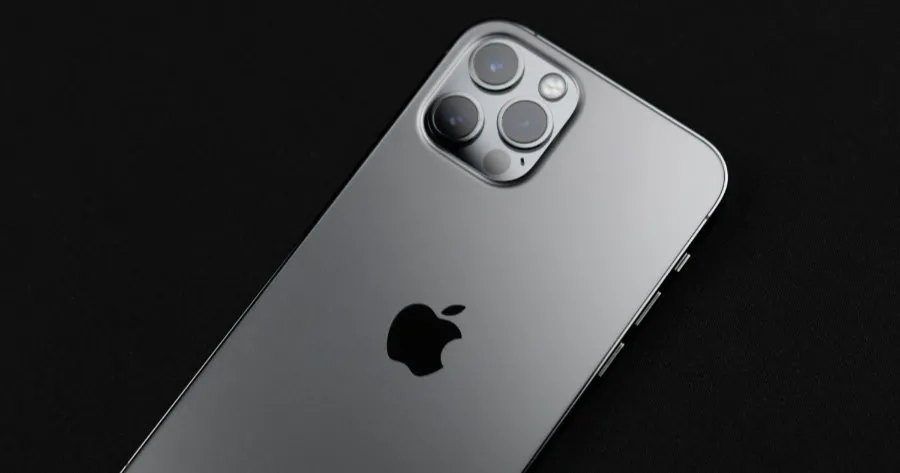
A flat-edge profile that calls back to the iPhone 4 / 5 era. The feel in the hand is noticeably different from the rounded sides used up through iPhone 11. If you have smaller hands, hold one in person before buying.
Picks by use case — which one to choose
Short answer: which model fits comes down to a single priority — one-handed, telephoto, or big screen.
One-handed use — iPhone 12 mini (5.4 inches)
iPhone 12 mini is the smallest of the line at 5.4 inches. Even counting same-generation Android flagships, a size like this is rare, so if one-handed operation is the top priority, it is the only real pick.
The trade-off is the smaller battery: heavy use can leave the meter uncomfortable by evening. If you’re out and on the phone all day, lean to the standard model or above.
Telephoto, low-light, LiDAR — iPhone 12 Pro / Pro Max
Only the Pro line carries the optical telephoto camera and the LiDAR scanner. The telephoto pays off when you want a tighter frame on a still subject or shoot portraits, and LiDAR feeds directly into autofocus speed in dim rooms.
- iPhone 12 Pro: 2x optical zoom
- iPhone 12 Pro Max: 2.5x optical zoom + sensor-shift stabilization
If “get a little closer” is the whole request, the standard model’s digital zoom is enough. If shooting people in low light is a frequent thing, the Pro-line gap is real.
Big screen — iPhone 12 Pro Max (6.7 inches)
6.7 inches earns its keep on video and games. It is also too large to fully wrap one hand around, so you have to accept it as a two-handed device.
Everything else — iPhone 12 (standard, 6.1 inches)
If neither size nor optical telephoto is on the wish list, the standard model leaves nothing on the table. From an iPhone 11, it is the most natural upgrade path.
iPhone 12 line-up comparison
| Model | Screen | Camera | Optical telephoto | LiDAR | Weight |
|---|---|---|---|---|---|
| iPhone 12 mini | 5.4 in | Wide + Ultra-wide | No | No | ~133 g |
| iPhone 12 | 6.1 in | Wide + Ultra-wide | No | No | ~162 g |
| iPhone 12 Pro | 6.1 in | Wide + Ultra-wide + Tele | 2x | Yes | ~187 g |
| iPhone 12 Pro Max | 6.7 in | Wide + Ultra-wide + Tele | 2.5x | Yes | ~226 g |
Spec numbers are Apple’s published figures. Weight is the published value, not a case-off measurement.
iPhone 11 or iPhone 12 — which one to buy
Short answer: it comes down to whether you’ll use 5G and whether OLED on the standard model matters to you.
The walkthrough for the iPhone 11 line is in How to pick an iPhone 11. Reading the two side by side makes it easier to see what actually changed at iPhone 12.
| Angle | iPhone 11 | iPhone 12 |
|---|---|---|
| 5G | Not supported | Sub-6 (Japan units) |
| Standard model’s screen | IPS LCD | OLED |
| MagSafe | Not supported | Supported |
| Smallest size | 5.8 in (Pro) | 5.4 in (mini) |
| Used price (2026 ballpark) | Cheaper | A bit higher |
If 5G and OLED don’t matter and price is the lead, iPhone 11 is enough. If “mini-sized for one-handed use” or “OLED even on the standard model” is what you’re after, iPhone 12 has a reason to exist.
FAQ
Q. Is there a reason to buy iPhone 12 new in 2026? A. Distribution of new units has more or less wound down, so refurbished or used is the practical channel. If you can verify battery health, it works as a secondary phone or for light use. As your main phone for years to come, lean to a newer generation.
Q. Is the mini’s battery really weaker? A. Yes — Apple’s published video-playback time is shorter than the standard model. Under heavy use the meter does get tight in the evening. The decision is whether you accept that as the cost of the one-handed size, or move up to the standard.
Q. Does iPhone 12’s 5G matter in Japan? A. At the 2020 launch the 5G footprint was thin; in 2026 coverage is wide enough that the upside is easier to feel. That said, Japanese units are Sub-6 only — the high-throughput mmWave bands are not on the table.
Q. Is upgrading from iPhone 11 to iPhone 12 worth it? A. If iPhone 11 still feels fine, there is no hard reason to jump. The usual triggers for upgrading are: wanting 5G, wanting OLED on the standard tier, or wanting the mini’s one-handed size.
Wrapping up
The iPhone 12 line has a clean historical position as “the first 5G iPhone in the rollout year,” and the move to OLED across the line plus MagSafe makes the generation feel cohesive.
If you’re buying in 2026, used or refurbished is the realistic line, not new. Settle three things before you order — screen size, optical telephoto or not, and your local 5G area — and the odds of buyer’s remorse drop.
If you’re still torn between iPhone 11 and iPhone 12, reading this alongside How to pick an iPhone 11 sharpens the generation gap.