
Contents17
- The verdict — worth the money if you raise a DSLR often
- Look and feel
- ProPad PP-2
- What worked
- One-handed, one-action to ready
- The lock does not open unless you mean it
- The button is built into the body, so it cannot be lost
- Arca-Swiss plates work too
- What didn’t
- Tolerance against third-party plates causes a metallic rattle
- Heavy lenses swing on a hip belt
- The standard plate slides on a tripod head
- How to mount and use it
- Fitting the camera plate
- Compared with camera belts and sling harnesses
- FAQ
- Verdict — if you raise a DSLR often, the day-to-day changes
2026 update: Ported from the old VuePress blog. The Peak Design Capture is still in the current line-up in 2026, with successive minor revisions of the V3 generation on sale. The review angles here — comfort on a hip belt, lock robustness, the metallic click from plate tolerance — still apply.
Take a DSLR out for the day and every shot has the same tax: dig the camera out of the bag, miss the moment, repeat. Lay it flat inside the pack and by the time it is out, whatever you wanted to shoot has already moved on.
To deal with this at the physical layer, I bought the Peak Design Capture V3 (CC-BK-3) and ProPad (PP-2) and have lived with them for a few years. The flow becomes: clip the camera directly onto a hip belt or backpack shoulder strap, lift it off one-handed, raise it to the eye.
The verdict — worth the money if you raise a DSLR often
Short answer: if you want out of strap-based carry, buy it. The lock is solid, the camera does not come loose while running, and after several years the button has never broken.
The reason is that the number of actions before the camera is at your eye drops sharply. Three actions — put the bag down, open the zip, lift the camera out — collapse to one: press the button and lift. With moving subjects that will not wait — kids, animals at a zoo, sports day — that difference is the gap between getting the shot and not.
A few cautions before buying:
- Hands-free types who only shoot occasionally: a strap for a few thousand yen is enough
- Full-frame + f/2.8 trinity users: hanging that much weight off the hip swings while you walk. Routing the load through the shoulder is more realistic
- People shooting in environments that need to be quiet: tolerance between the plate and the clamp can produce a metallic click (more below)
Look and feel
Short answer: machined aluminium, single matte black, edges rounded but the surface feels hard. The build quality sits above most camera accessories.
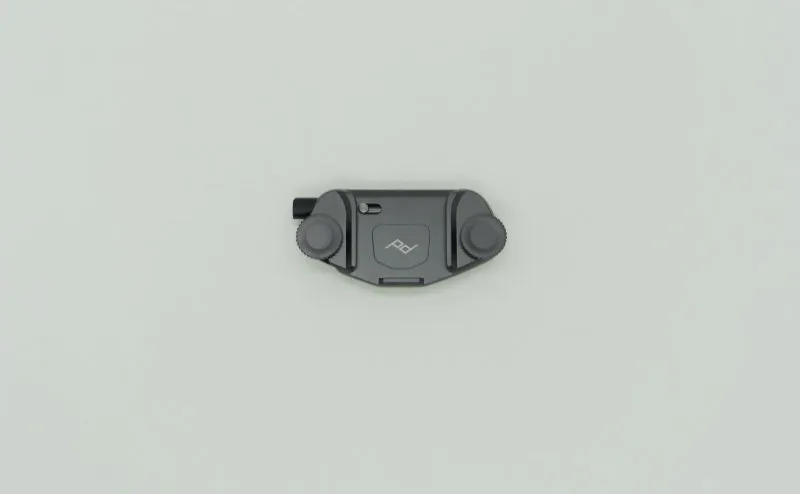
The front is plain. A lock-release button sits in the centre, with hex-socket clamp screws to either side.
| Spec | Capture V3 |
|---|---|
| Size | about 13 × 13 × 3 cm |
| Weight | about 144g (rated) |
| Material | machined aluminium |
| Strap thickness | up to ~6.4mm (rated) |
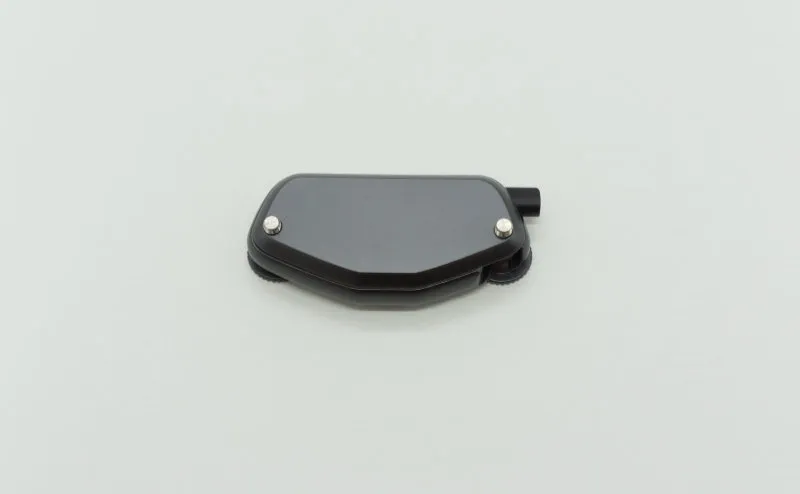
The back is flat. This is the face that meets the belt, and it is designed to have nothing catching. On a hip belt the surface ends up close to your skin and hip bone, so the cushion (ProPad) earns its place.
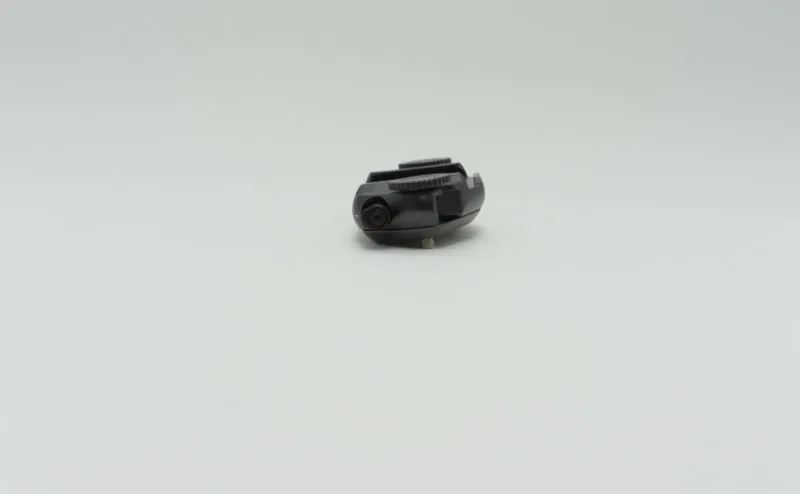
From the side the depth is shallow. On a hip belt it is small enough that the hem of a jacket can cover it.
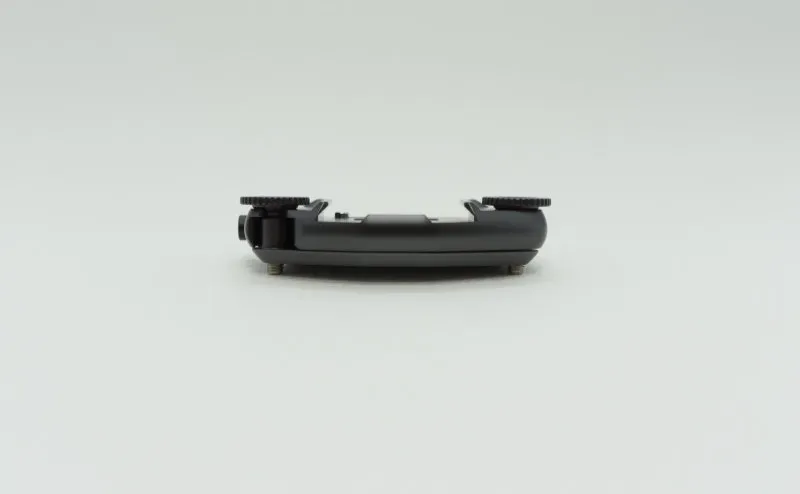
The underside is the female slot for the plate. The trapezoidal quick-release plate on the camera slides into here from above.
ProPad PP-2
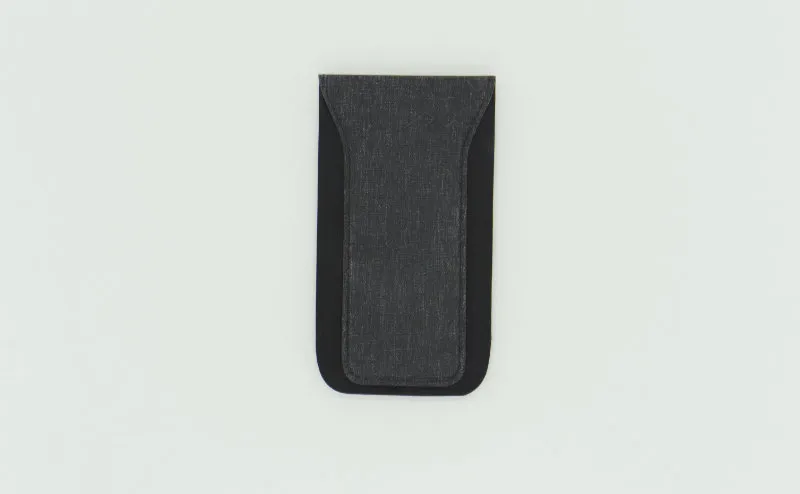
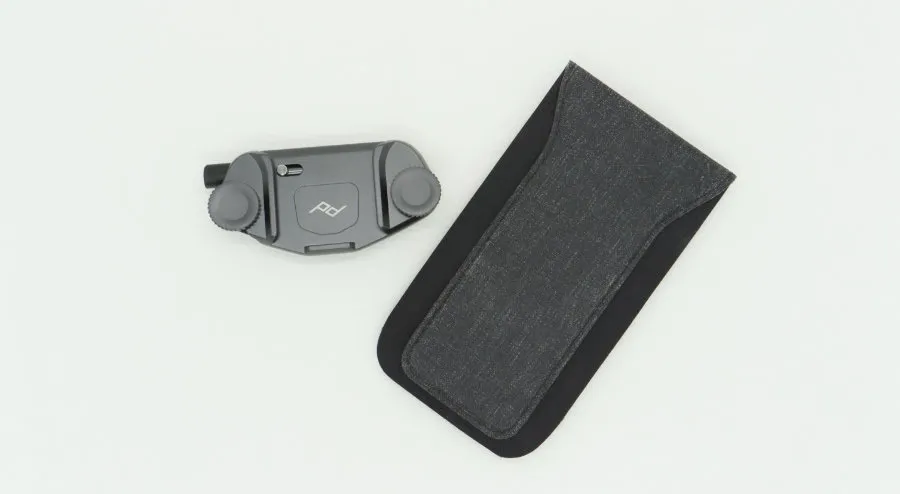
The cushion that sits between the Capture and a hip belt to spread the load.
| Spec | ProPad PP-2 |
|---|---|
| Size | about 17 × 9 × 3 cm |
| Weight | about 36g (rated) |
| Material | cushion + hook-and-loop |
The cushion is not overly thick, and once the belt is tightened it sits flush against the hip. Even when I worked up a sweat the hook-and-loop did not loosen.
What worked
Short answer: the motion to bring the camera to your eye is at its shortest / the lock is genuinely robust / nothing has broken over several years.
One-handed, one-action to ready
The biggest single win. Hold the lock-release button while you pull the camera up — done.
Unlike pulling it out of a bag, by the time it is up it is already in shooting position. With kids or animals that move unpredictably, the two or three seconds saved decide whether the shot exists. The effect has been largest for travel, sports day, the zoo, and hiking.
The lock does not open unless you mean it
If it is one-handed in one motion, the obvious worry is “will it pop open while I am walking?” Over several years of use, that has never happened.
The lock geometry will not allow vertical removal without the button being pressed. Run, jump — as long as nothing touches the button, the camera stays put. Press it intentionally and it slides out cleanly. The on/off distinction is unambiguous, with no nagging worry about accidental release.
The button is built into the body, so it cannot be lost
A generic camera clip I had used before put the lock-release button on a removable cap. Within six months it had gone missing and the clip was unusable.
On the Peak Design side the button is fully integrated into the body — you cannot pop it off even if you try. Serviceability suffers in exchange, but the field-loss risk drops to zero, and in real use that matters.
Arca-Swiss plates work too
The standard Peak Design plate has an Arca-Swiss-compatible cross section, so if your tripod head already takes Arca-Swiss clamps, the same plate goes straight onto the tripod with no swapping.
Third-party Arca-Swiss plates have also worked in the slot. If you are buying a new kit it is safest to stay all Peak Design, but if you have already standardised your tripod side on Arca, the cost of moving over is low.
What didn’t
Short answer: third-party plates can rattle metallically / heavy rigs swing on a hip belt / the standard plate slides on its own bottom face.
Tolerance against third-party plates causes a metallic rattle
The plate slot is built with some clearance, presumably so that it will accept a range of compatible plates.
With the genuine Peak Design plate there is almost no play, but a third-party Arca-Swiss plate can produce a light metallic click-clack, more obvious the faster you walk. For environments where silence matters — bird photography, say — the realistic options are to standardise on Peak Design plates, or to take up the slack with a thin strip of PTFE tape.
Heavy lenses swing on a hip belt
Mount a full-frame body with a 70–200mm f/2.8-class lens on the hip and it bounces up and down with every step. This is not really a problem with Capture; it is the physical limit of hanging that much weight off a hip belt at all.
In practice, for rigs that heavy, move the Capture onto a backpack shoulder strap, or pair it with a regular strap to share the load. Hip-belt use stays comfortable up to about mirrorless plus a prime or a standard zoom.
The standard plate slides on a tripod head
The base of the standard plate is flat, with no cork or rubber anti-slip layer (may vary by unit).
If you set the camera down on its bottom directly, or onto a slick tripod head, there is a slight slip. Clamped down it is fine, but a casual drop onto a desk can start sliding, so worth knowing.
How to mount and use it
Short answer: open the clamp, thread the belt, tighten — 30 seconds. The plate stays on the tripod thread once you put it on and basically never comes off.
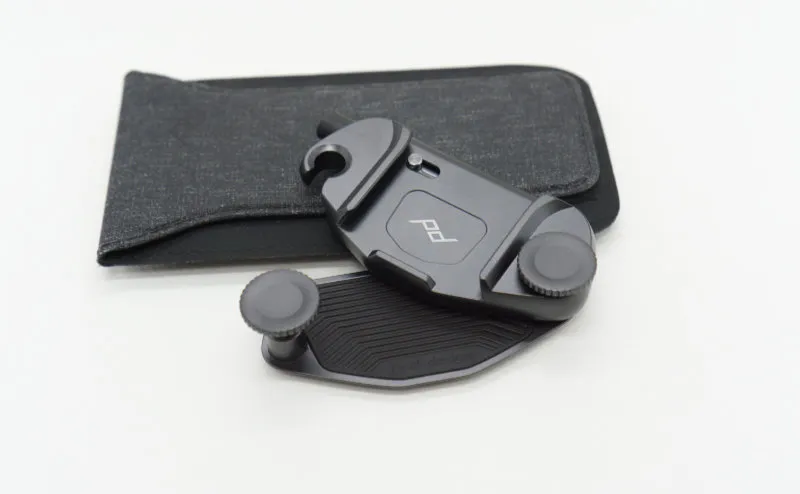
First, loosen the two clamp screws with a hex key. You can work from either side. With the screws loose, the upper half rotates open and clears a path for the belt.
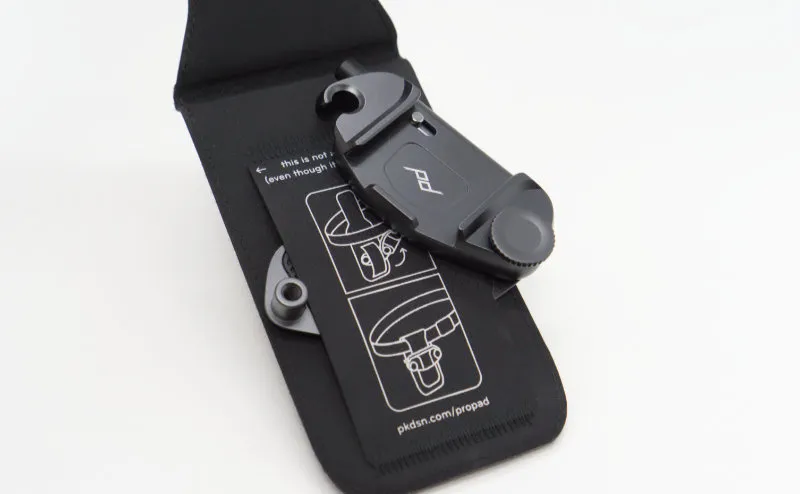
For hip-belt use, open the ProPad and sandwich the Capture in along the printed guide on the inside. Thread the whole sandwich onto the belt.
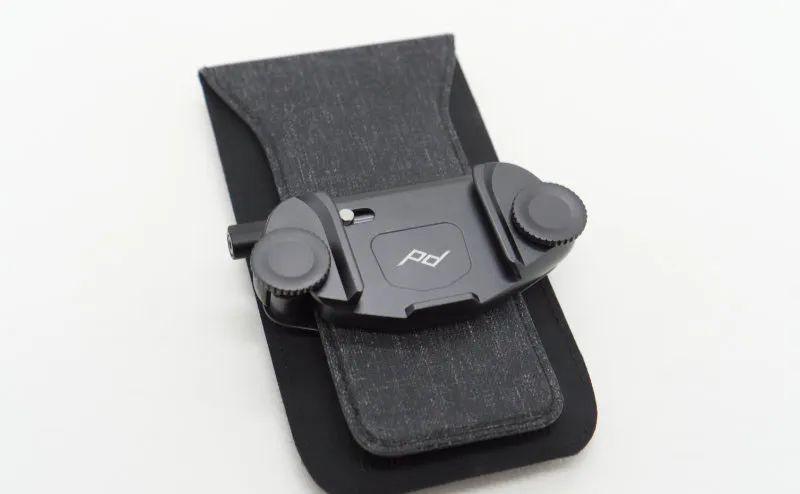
Close the ProPad, swing the Capture’s upper half back into place, and retighten the screws. Done — 30 seconds once you know the moves.
Fitting the camera plate
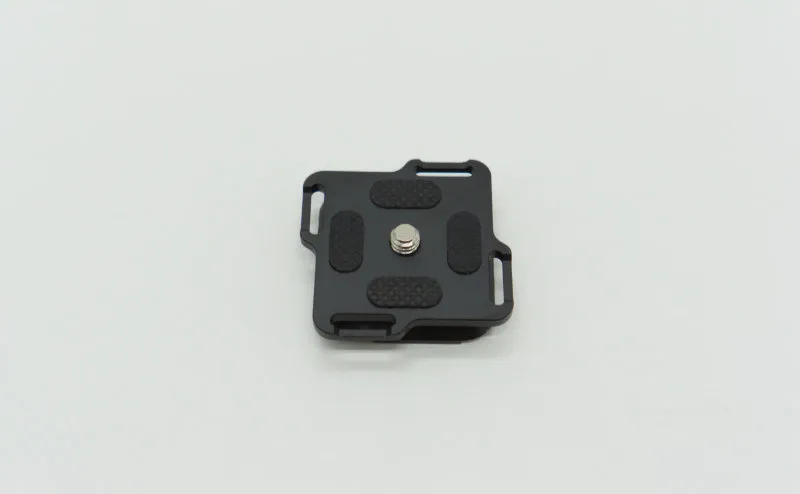
On the camera side, screw the quick-release plate into the tripod thread with the 1/4-inch screw. Once it is on, it basically stays on.
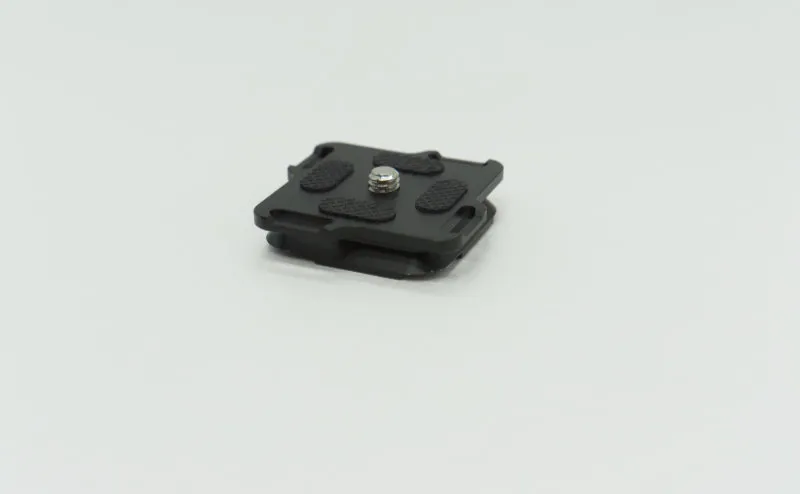
Seen from the side, the base is trapezoidal (Arca-Swiss compatible). That dovetail slides into the matching female profile inside the Capture.
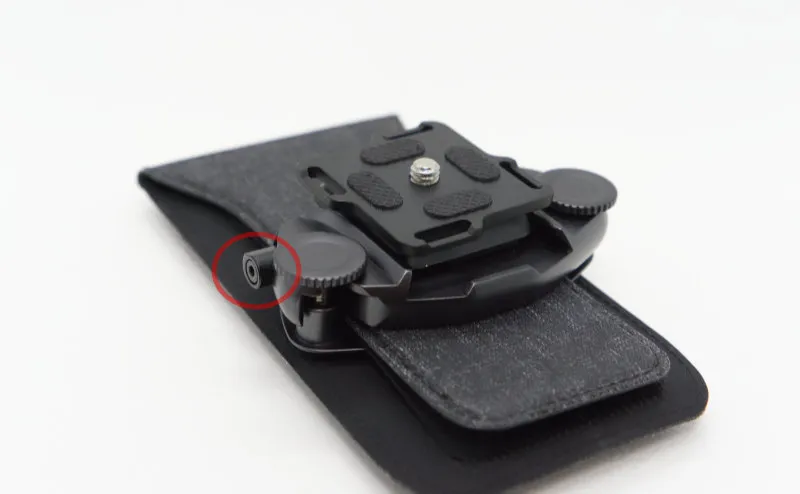
Press the black cylindrical button on the side of the Capture, then drop the plate in from above.
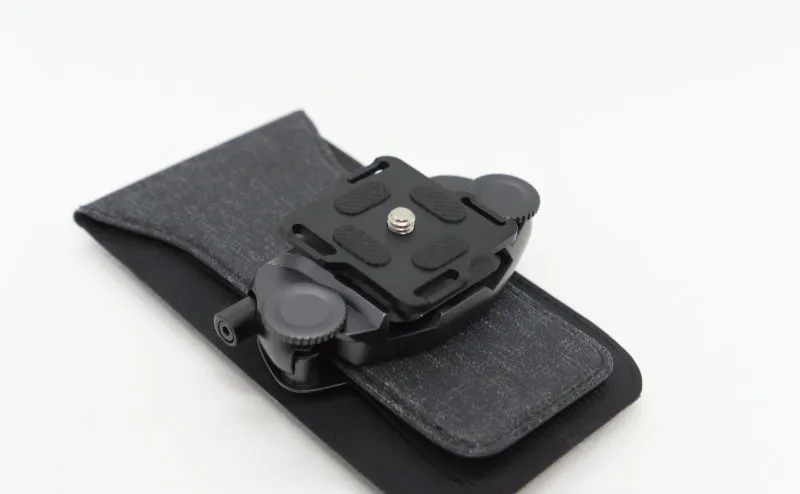
Push it all the way down, release the button, and the lock engages. Removing it uses the same button in reverse.
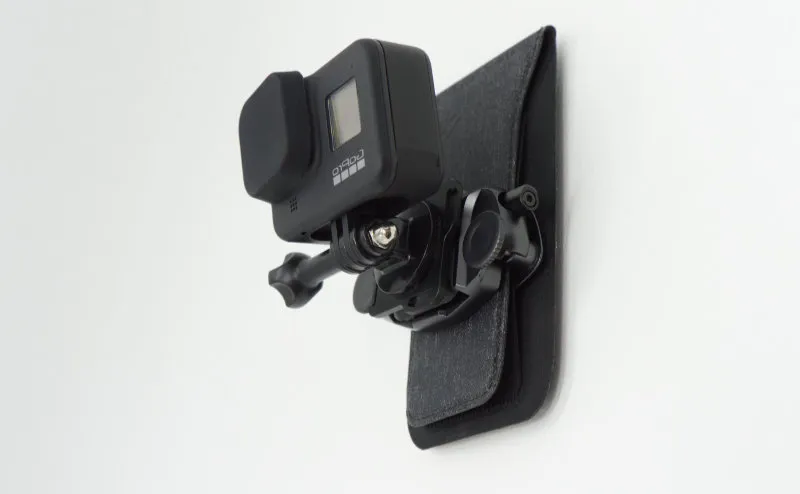
A GoPro will also fit, given an adapter mount with a 1/4-inch thread. In practice, though, the main use case is mirrorless or DSLR carry on a hip belt, not action cams.
Compared with camera belts and sling harnesses
Short answer: Capture locks the camera flush to your body, a harness slings it off your shoulder for a fast lift, a neck strap just hangs it from your neck — they are answers to different questions.
| Angle | Peak Design Capture V3 | Sling harness (general) | Neck strap (general) |
|---|---|---|---|
| Mount position | Hip belt or shoulder strap | Shoulder / under arm | Neck |
| Bring-up motion | Press button, lift out | Lift the dangling camera | Lift the dangling camera |
| Hands fully free? | Yes — locked in place | No — still swings | No — still swings |
| Stability while running or jumping | High (no swing) | Medium (strap rebound) | Low (camera flails) |
| Heavy lenses | Swings on a hip belt | Good — shoulder absorbs it | Average |
| Noise | Possible plate-tolerance click | Quiet | Quiet |
| Price band (at the time of writing) | ~18,000–20,000 yen | ~5,000–15,000 yen | ~2,000–5,000 yen |
“I want the absolute shortest path to my eye” and “I want both hands genuinely free” both point at Capture. “I want to walk with the camera hanging off me all day” leans toward a harness, which is less tiring over long stretches.
For an adjacent piece in the same camera-accessory category, I also wrote up the JOBY GorillaPod JB01542-PKK, which is a small flexible tripod for wrapping around a pillar or shelf. That sits on the desk-or-pillar layer rather than the body-mounted layer, so it is a separate choice from Capture.
FAQ
Q. What cameras and packs does it fit? A. The clamp is rated for straps and belts up to about 6.4mm thick. That covers the shoulder straps on most camera backpacks and hip belts up to roughly 5cm wide. On the camera side, anything with a 1/4-inch tripod thread will work — mirrorless, DSLR, or compact. Heavy rigs (a full-frame body with a telephoto, for example) put real load on the shoulder or hip, so pairing with a shoulder strap is the practical call.
Q. Is it better than a harness or a sling strap? A. They solve different problems. A harness or sling strap is for “hang it off the shoulder and bring it up fast”; the camera always dangles from your body. Capture is for “lock it flush to your body” and is strong when you want both hands fully free — hiking, shooting with kids. The way the weight is routed is also different: a harness rides on the shoulder, Capture distributes load through the hip (via the ProPad). People who shoot a lot on a tripod, or who swap lenses often, frequently end up using both.
Q. Do I actually need the ProPad? A. For hip-belt use, effectively yes. With Capture alone, the back of the clamp digs straight into the belt, and after a long walk it presses on the hip bone and hurts. ProPad sandwiches the belt in cushioning so the load spreads out around the waist. For backpack-shoulder use the cushion is not needed and Capture on its own is enough. The rule of thumb is “ProPad for hip, Capture alone for shoulder.”
Q. Does it hold up over years of use? A. After several years of daily use, the lock mechanism has never failed. The clamp screws, the lock button, the aluminium body — none of them show meaningful wear. By way of comparison, a generic clip from another brand I had used before had a removable lock button, and within six months the button was lost or broken. On the Peak Design side the button is built into the body and cannot be removed, so the loss risk is structurally zero.
Verdict — if you raise a DSLR often, the day-to-day changes
It is the kind of accessory that picks its users, but for the right use case it is hard to go back to strap-only carry.
It is an easy recommendation for kids, travel, the zoo, hiking — anywhere you want both hands free with a DSLR ready to come up in one motion. Conversely, if the camera only comes out a few times a month, a neck strap for a few thousand yen will do the job.
The two cautions are the metallic click from plate tolerance and hip-belt swing with heavy lenses. The first is fixed by standardising on Peak Design plates; the second by moving over to a shoulder-strap mount.